
Linode API
Easily configure, manage, and deploy user management, billing, support tickets, and more with programmatic access to Linode products and services.

curl -H "Content-Type: application/json"
    -H "Authorization: Bearer $TOKEN"
    -X POST -d ' {
        "image": "linode/debian10",
        "root_pass": "aComplexP@assword",
        "label": "linode-interfaces-3",
        "type": "g6-standard-2",
        "region": "us-east"
    }'
    https://api.dev.linode.com/v4/linode/instances
Harness the power of the Linode API
with community-contributed tools
with community-contributed tools
Take advantage of the Linode API with tools and libraries that help streamline your next infrastructure project.
Libraries & Clients
Incorporate Linode products and services into your application code by installing Linode’s official programming language libraries and clients.
Third-Party Tools
Use your favorite orchestration and automation tools to deploy and manage Linode products and services.

Terraform Linode Provider
Terraform is an Infrastructure-as-code tool that includes management features for various types of Linode resources.

Easy Scripting
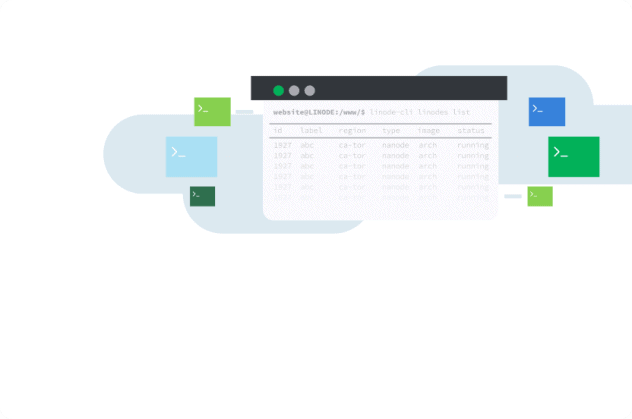
Everything you can do with the Linode Cloud Manager can be done through the CLI. Automate frequently performed tasks by incorporating CLI commands into your scripts.

Rancher
Linode integrates with Rancher; an easy to use GUI for creating and managing Kubernetes clusters.

Pulumi
Manage your Linodes with your favorite programming languages. The Pulumi Linode resource provider makes it possible to control Linode resources directly from your code.
Additional Features
More ways to interface with the Linode Cloud

Guides and Resources
-

Getting Started with the Linode API
-

Configure NodeBalancers with the Linode API
-

Manage Block Storage Volumes with the Linode API
-
How To Create an OAuth App with the Linode Python API Library
-
A Tutorial for Deploying and Managing a Cluster with Linode Kubernetes Engine
-

Use Terraform to Provision Linode Environments
-

How to Deploy Kubernetes on Linode with Rancher 2.2